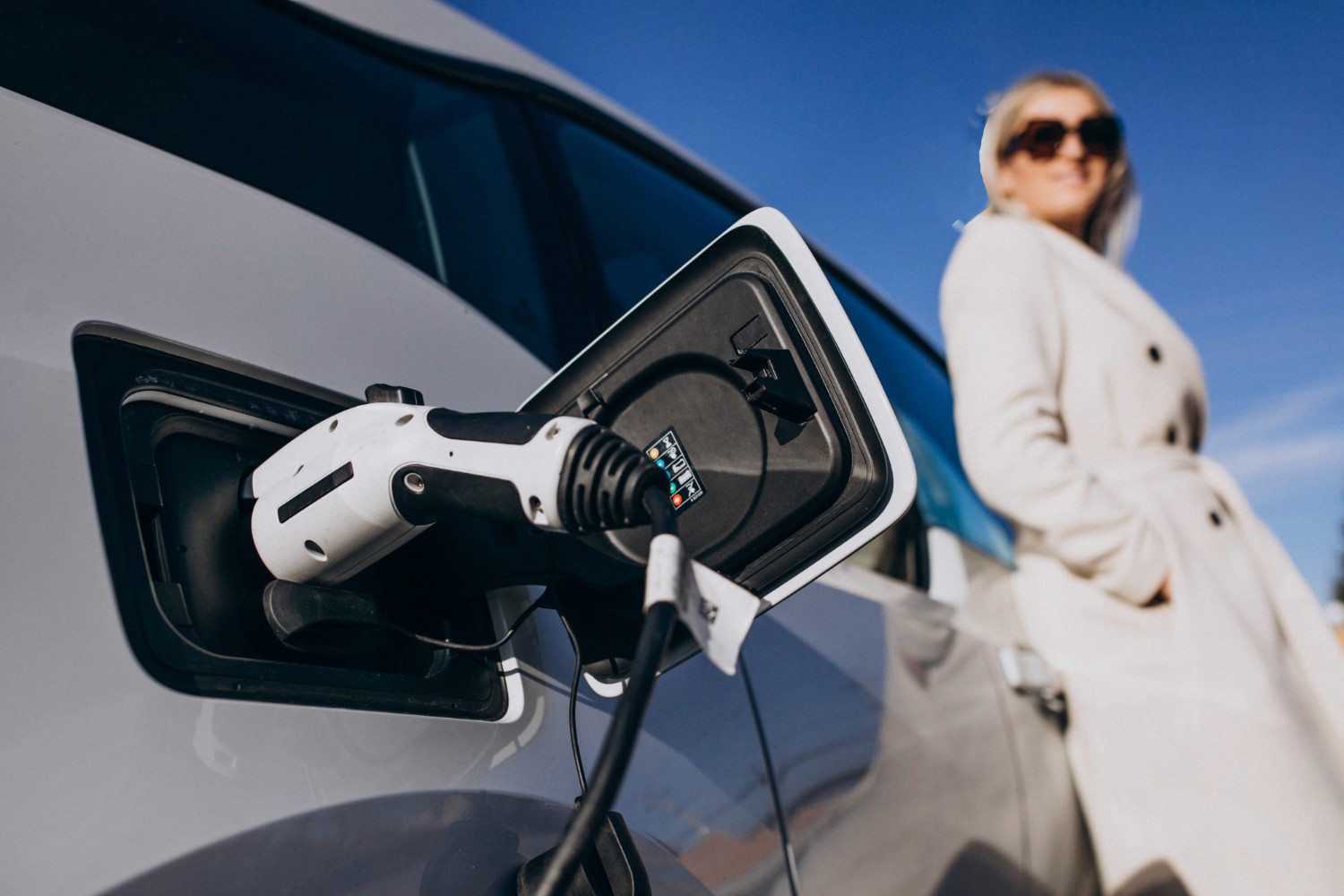
2026 decides: How electricity suppliers retain their e-mobility customers with the throughput model
4 minutes
2025 was the preparation phase. 2026 is the first year in which electromobility, regulatory requirements, and digital customer solutions come together operationally. Electricity suppliers that continue to sell "electricity at the measuring point" exclusively will not only lose supply volumes but gradually the customer relationship.
Because electricity is no longer consumed where the supply contract ends. It is charged at the employee's home, on the road at public charging points, or at other locations. That's where new revenues are being generated today – often outside the direct access of the electricity supplier.
Why the "Electricity at the Measuring Point" model will no longer be sufficient in 2026
The classic electricity sales model reaches clear limits in the context of electromobility. Customers charge while on the go through roaming providers with opaque prices. Charging company vehicles at home requires complex flat rates and refund models. While electricity suppliers provide the electricity at the location, other providers generate revenue with the charging electricity.
The economic consequence is measurable. A medium-sized electricity supplier loses quickly 40,000 to 60,000 euros in contribution margin per year for every 100 electrically operated company vehicles. Not through cancellations, but through circumventing consumption.
The solution: The electricity contract becomes mobile
With the throughput model, also known as Bring Your Own Power, the electricity contract remains the central anchor – regardless of where the electricity is physically taken. Through virtual balancing, every kilowatt-hour charged is assigned commercially to the balancing group of the electricity supplier, even if the charging process takes place at a foreign charging station or at the employee's home.
It is important to note: The throughput model is not a new product but an extension of the existing electricity sales. The electricity supplier remains in its role – with a significantly larger reach.
Bring Your Own Contract: The logical evolution
Customers not only bring their electricity but their entire contract. Tariff logic, green electricity options, and reporting become mobile. For electricity suppliers, modular contract models emerge: base load at the location, flexible components for charging, and optional ESG and green electricity modules. This significantly increases the switching barrier and creates differentiation from interchangeable commodity tariffs.
Employee Charging: The greatest economic lever
Employee charging is currently one of the most economically attractive application areas of the throughput model. In the classic setup, employees charge privately, companies reimburse a flat rate, and the administrative effort is high.
In the throughput model, the electricity is delivered directly from the corporate contract. Each kilowatt-hour is assigned transaction-specifically. There is an invoice, VAT deductible, without refund logic. A company with 50 company vehicles thus becomes 51 delivery points – without having to conclude 50 new individual contracts.
Virtual balancing models are not a future concept. They have been in productive use in Germany since 2022 and are recognized by regulators.
Home Charging with Corporate Contract: A clear win-win model
Companies benefit from commercial electricity prices and a clear cost center allocation. Employees do not have to advance private electricity costs and receive full transparency over their charging processes. Electricity suppliers unlock additional delivery volumes and increase customer loyalty. There are several million company vehicles nationwide. Each one needs electricity. With the throughput model, this electricity is not provided by third-party providers but by the existing electricity supplier.
Granular Green Electricity Certificates: CSRD-ready from 2026
2026 is the first full reporting year of the CSRD. Annual average certificates are no longer sufficient. Granular, blockchain-verified green electricity certificates allow for the clear assignment of each individual kilowatt-hour to the producer – even during employee charging or at public charging points. This allows for premium products instead of commodity tariffs, audit-able ESG compliance, and clear differentiation in competition.
Your role in the throughput model
The role of the electricity supplier remains clear and low-risk. The electricity supplier concludes the contracts, procures electricity, manages the balancing group, and settles with the customer. The platform takes care of the assignment of the electricity quantities, market communication, as well as documentation and proofs. The electricity supplier remains an electricity supplier – with higher value creation depth.
Economics: When does the model pay off?
A realistic scenario:
50 business customers with an annual consumption of 40,000 kilowatt-hours each generate 2 gigawatt-hours. Due to additional e-mobility consumption, the supply volume increases by about 40 percent. This corresponds to approximately 800,000 kilowatt-hours of additional supply volume.
With a conservative margin, this generates over 20,000 euros in additional revenue per year – while simultaneously achieving higher customer loyalty and lower switching rates.
Why OLI is the least risky way
With the platform from OLI Systems GmbH, electricity suppliers implement the throughput model without in-house development. The go-live occurs in 6 to 8 weeks instead of 12 to 18 months. The setup costs are around 25,000 euros instead of over 80,000 euros for an in-house project. The break-even is typically reached after 2 to 3 months. The solution is white-label, legally secure, and operationally tested.
Conclusion
The electricity sales becomes mobile. The question is not whether this change will come, but who will benefit from it. 2026 will not be prepared. Decisions will be made.
Next step: Schedule a 15-minute live demo and see the dashboard, billing, and use cases in real operations.